
The summer people go home before the sky grows all muscular with the clouds that will bring the first snow down upon Chisago County in Minnesota. They are all gone by then—all the happy children, and the men in battered hats as thickly stuck with fishing lures as Moby Dick’s hide was with harpoons. They come in the summer to fish the lakes for muskies—there is even a muskie painted on the water tower that greets you as you drive into Chisago City—and they take their leisure and the fish together, and they leave before the lake turns to deep, black ice. They leave and the farmers stay.
Dairy farmers, mostly, and the times have not been kind to them. Between 1984 and 1988, five percent of the famers in the county lost their land. Debt ate them up, and they sold off their farms and left, and many of the ones that stayed now work second jobs. They are bank clerks and insurance men for eight hours a day, and they are farmers when they can afford to be. It is a stubborn culture. Tattered and ragged, it nevertheless coheres. The famers in Chisago County rejoice together in the good times. In the bad, they gather themselves together and they help how they can. They bring food. They bring themselves. They provide community, a gathering of lights along the dark and narrow roads.
Trouble does not creep into Chisago County unannounced.The land is flat, so you can hear the ambulance coming from a long way off.
It is neither an easy life nor a safe one. It’s no longer one man, one mule and a noble squint toward the far horizon. All modern farming relies on the operation of sophisticated, heavy equipment. The machines make the job of farming easier. They also make it as surely perilous as a job working the high steel. Almost every local farmer knows someone who has been killed or seriously injured by the machines that helped him earn a living. Just this fall, a young girl was riding a feed wagon drive by her father. The wagon bounced, and the child fell under the wheels and was crushed. The father never knew it until it was too late. By nightfall, the other farmers had come. They brought food and they stayed a very long time.
Trouble does not creep into Chisago County unannounced. The land is flat, so you can hear the ambulance coming from a long way off. On November 13, 1989, a cold morning with light snow blowing wild as confetti in the freshening wind, Don Johnson was finishing his morning chores. He was 67 years old, and he had been farming his land since he came home from the war. He had a healthy respect for the perils of his work. “Cattle are big,” he says. “Handling cattle is dangerous.” Johnson was walking back toward his house when he heard the siren screaming down one of the rutty little back roads nearby.
The ambulance turned down Quinlan Road, and onto Bloom Lake Road, speeding toward the Bloom Lake Dairy Farm where Dick and Mary Beardsley live. Dick Beardsley was 33 years old and, some seven years earlier, he had been one of the finest marathon runners in the world. He had won the London Marathon in 1981, and, in the 1982 Boston Marathon, he had dueled Alberto Salazar for 26 miles, losing by a scant two seconds in what is reckoned by some to be the greatest marathon race in history. Salazar gave so much to beat Beardsley that his body temperature at the end of the race was 88 degrees. One doctor at the finish line compared Salazar’s body to a potato chip. Shortly after the race, Salazar spotted Bill Squires, the remarkable coach who had trained both him and Beardsley. “My God,” Salazar gasped to Squires, “You trained that kid to kill me.”
Beardsley was a farmer at heart. He’d luxuriated in his grandparents’ dairy farm and, as soon as he could afford it, he and Mary had bought a farm or their own in Rush City, on the other side of Chisago County. They’d sold that off (at a minimal profit) in 1986 so that Dick could train fulltime to try and make the 1988 U.S. Olympic team. He had failed in that attempt. His running career was over. At least for the purposes of competitive racing, his legs were shot.
So Dick and Mary and their adopted son Andy came back to Chisago County, and they were living on the Bloom Lake farm, working toward eventually buying it from the owner. On the morning of Nov. 13, Dick Beardsley had been loading feed corn on an elevator that was attached to his tractor. His left bootlace snagged in the tractor’s power-takeoff shaft. Beardsley’s left leg was wrapped around the shaft, the way you can wrap a string around your finger. Every time the shaft took him around, it slammed him into the ground. Somehow, Beardsley managed to turn off the tractor, and to crawl up toward the farmhouse, and that’s where Mary and the ambulance found him, lying in the new-fallen snow, his leg a tangled mess of torn ligament and muscle, five ribs broken and his left wrist shattered, breathing shallowly and fading into shock. The ambulance took him off to the hospital. You could hear the siren clearly from all the other farms.
They started coming by nightfall. Don Johnson came. So did so many others. They brought food and they stayed for a very long time. Over the next several months, they would help Mary work the farm while Dick recovered, because that is what you do when you farm in Chisago County and you hear the siren in the cold distance. “You help because you know that, the next time, that could be you, or someone in your family,” says Don Johnson.
It did not stop at the county line, however. Help came from Boston, too, from two saloons and their patrons, from the people who stood along the streets in 1982 and cheered while Dick Beardsley did something rare and wonderful. Those people felt what the farmers felt. You do what you have to do. You bring food and you bring yourself. You provide community, a gathering of lights along the dark and narrow roads.
It all began because he’d thought the tractor was out of gas. He forgot about the trouble they’d been having with the fuel filter, which would plug up and then the tractor would stall as though it had run out of fuel. So he’d put some more gas into the tank, climbing up on the drawbar to do it. “I didn’t check to see if the power-takeoff lever had been pulled,” he says.
As he reached to turn the key, his pant leg rose up, exposing the long lace of his work boot. Beneath him was the tractor’s drive shaft. In most newer tractors, there is a metal shroud over this shaft, but Beardsley’s tractor was an old one. He turned the key and the world went mad on him.
There was no up and down. There was no left and right. He remembers it as being rather like a pilot caught in a hopeless spin. He just knew that, unless he sopped the machine, it was going to kill him. “As soon as I hit the key,” Beardsley recalls, “all of a sudden, just like that, I’m just being sucked into the thing. I thought, ‘My God, it’s just going to wind my whole body around it and break my neck, or end up squeezing me to death or something.’ ”
He remembers getting one arm loose from his coveralls, all the while being spun around the power-takeoff shaft and slammed into the ground. “Finally, out of desperation, I threw out my arm and, it was like my fingers grew or something, and I was able to grab the lever and just hold on. My whole world was going in all directions. I knew that, if I lost consciousness that would be it. I was so afraid that I was never going to see Mary or Andy again.
Beardsley remembers the race and the accident in the same vivid detail. They are, for good and ill, his defining moments.
“I was screaming, but Mary was in the milkhouse and Andy was off at school, so nobody could hear me. When it sopped, I was lying all wrapped up in this thing, and everything was going in every which direction. I somehow got myself untangled, and I thought, ‘Gosh, if I pass out where I am, Mary might not even see me and think I’m off in the fields chasing a cow or something.’ So I tried to crawl across the road toward the house. I was getting weaker and weaker. Finally, Mary came out and saw me. By this time, I was shaking uncontrollably. They had to stabilize me before they got me into the ambulance.”
They took him first to the Chisago County Health Services, a forty-bed facility just down Route 5 from the farm. He was there for two and a half days, and he doesn’t remember any of it. He was attached to an I.V. machine, and he could push a button every time he wanted a dose of painkiller. He pushed the button a lot over those two days. Then, he was transferred to the Fairview-Southdale Hospital in the Twin Cities, where an orthopedic surgeon named Richard Schmidt went about the task of putting Dick Beardsley’s leg back together.
“Being in the city, we don’t see too many farm accidents,” Schmidt says. “But accidents with the power-takeoff shaft are pretty common. In Dick’s case, he was lucky he got that machine shut off because it was getting ready to take his leg off at the knee.”
Schmidt repaired all the ligament damage that had been done, essentially giving Beardsley a new left knee. An excruciating program of physical therapy began almost immediately. After the first operation, Beardsley awoke to find his leg strapped to a contraption that made it go around and around, almost like pumping a bicycle while lying flat on your back. He spent two weeks in the hospital, and then he went home.
By then, Don Johnson and the rest of the farmers had settled into a regular schedule of helping Mary run the farm. She assigned the chores. She told them what had to be done. “We did some. We did all we could,” Johnson says. “But she was the A-1 person there.”
“As hard as something like this is for you, it’s ten times worse for your family,” Beardsley says. “It was so tough on Andy. I mean, Mary’d be in the barn showing people what to do, and he’d be in here with me, and I’d be in the bed. That was the worst part for me. I couldn’t do anything.” For two weeks, the pain kept him from sleeping.
He had to go back to the hospital twice, once for a virulent infection of a kind common to victims of farm accidents. “In a farm accident, there are all kinds of interesting little organisms that can get in there,” explains Schmidt. The physical therapy continued. The medical bills ultimately topped out at $75,000.
For all the vaunted independence of a farmer, it is, in fact, a very precarious life. “They say that you are your own boss,” says Don Johnson. “But, really, you’ve got a lot of bosses.” Bankers. Loan officers. The occasionally erratic shifts in the local and national economy. All of them have power over the farmer that belies the independent image. One bad season can swipe out a life’s work. One bad accident can do even worse damage.
The accident had caught the Beardsleys at the worst possible time. Their old medical policy had expired on Oct. 31, and their new one wasn’t due to start until Dec. 1. There was not $75,000 in this little family. There was not even close to that. “We were just devastated by it,” Beardsley says.
Some of the doctors chose to forgive the debts entirely. And a local bank started a trust fund for the family. That is when the checks started to come in. Not just local checks, but checks drawn on Massachusetts banks, checks from people who had seen Dick Beardsley run one great foot race and, touched by it, were paying him back.
He remembers the race in the same vivid detail with which he remembers the accident. They are the two central events of his life now. For good and ill, Boston and The Accident are the defining moments for him, intertwining with each other. “I’ll never forget anything about either one of them,” he says. He remembers the mob at the start, the crazed sprint by the leaders through the first mile. He remembers Salzar, cocky and hard-bitten, waving at his friends as they coursed through his hometown of Wayland. To heck with this, Dick Beardsley thought. He waved, too. He remembers all of them falling away—Bill Rodgers first, and then a runner named Ed Mendoza virtually disappearing at the base of the hills in Newton. He remembers the last miles with Salazar, shoulder to shoulder in the 75-degree heat, too hot to be running this fast.
He remembers those last, frenzied miles. Some crazed fan trying to stuff a dollar bill down Salazar’s shorts. The two of them nearly run down by the press bus, and the roads leading into the final stretch clotted thickly with people, and any pretense at crowd control long since abandoned. A long tunnel of noise and joy. He remember the cramp he got in his right hamstring there in the last mile, and he remembers Salazar, smelling blood, taking off. Then he remembers stepping into a pothole directly in front of the Eliot Lounge, the hangout for runners and writers that has been the race’s unofficial headquarters for almost two decades. Miraculously, the jolt of stepping into the pothole loosened the cramp, and Beardsley remembers taking off in a head-down sprint, and he remembers Salazar looking back at him in horror. And it was there, as they turned into the final straight, that Bill Squires almost fell off the building.
He and Beardsley had worked together for two years. Through his work with Rodgers, Squires had developed a reputation as a master at training runners to run on the roads, which was something then just becoming a lucrative pursuit. At the same time, Squires also had developed a reputation as the marathon’s premier eccentric genius. Conversations with him are constructed like beach houses, with wings and decks that go off in all directions. He has been known to write workout programs on napkins, envelopes, the pages of newspapers or anything else that came handy. In 1980, at the Falmouth Road Race, Beardsley got up to go to the bathroom late at night in a house that the New Balance shoe company had rented for the weekend. He found Squires asleep in the bathtub. “He gave up his bed for one of his runners,” Beardsley marvels. “Now that’s a coach.”
Beardsley remembers taking off in a head-down sprint, and he remembers Salazar looking back at him in horror.
Squires saw strength in Beardsley. “At first I thought, well, hey, this guy’s pretty small,” he says. “Then, I figured, hey, this guy works on a farm, so there’s got to be some muscle there.” Squires put Beardsley through a grueling regimen of long speed workouts on the roads, pointing him toward Boston in 1982. One of their last workouts before the race was a savage pounding up and down that stretch of the course that includes Heartbreak Hill. The workout was further complicated by the fact that a nor’ easter had blown up, and Beardsley found himself running through a blizzard. “It was blowing 45 miles an hour, and the snow was coming sideways into my eyes,” Beardsley recalls. “I must’ve been the only runner in Boston out that day. I got done with that and I knew I was going to run well. It just seemed so easy, like floating.”
That was the place from which he summoned that final sprint. Salazar looked back and blanched. Above them, on the roof of the Hynes Auditorium, Squires was working as an analyst on WBZ-TV’s live broadcast of the race. When he saw Beardsley closing in on Salazar, Squires lost it completely. “Ayyyy, Dickie,” he screamed, and WBZ anchor Liz Walker, a rawboned sort, grabbed Squires before he could become airborne.
Beardsley caught Salazar. Instead of simply sprinting past him, however, Beardsley fell into pace with him again, and Salazar threw out what he had left for a kick and won the race. The two men collapsed into each other’s arms at the finish line, and the winner needed Dick Beardsley to hold him up.
Neither was ever the same after that. Against Squire’s advice, Beardsley over-competed and, thus, overtrained. “I’ve always found it hard to say no to people,” he says, “They’d just say, ‘Well, just come and you don’t have to race hard.’ But you get there, and they’ve paid your way and all, so you figure, ‘Well, I’ll race hard just this once.’ ” He tried to run that fall’s New York City marathon. “I came off the Verrazano Narrows Bridge, and my left leg was like a rock,” he recalls. “By five miles, my right leg was like a rock.” Eventually, he would have surgery on his left Achilles tendon, and his competitive career would end at the 1988 Olympic Trials. He would go home again. He would go home and he would be a farmer.
Word of his accident hit Boston around Christmastime last year. Two bartenders, Tommy Leonard of the Eliot and Eddie Doyle of the Bull and Finch Pub (the prototype for TV’s Cheers, much to the dismay of Bull and Finch regulars who are tired of posing for snapshots with tourists from Iowa), began a drive for contributions to the fund set up by a Chisago County bank. The proceeds from the annual Jingle Bell Run were dispatched, as was one check that meant more than the rest. It was for $1,000 and it was from Bill Squires, who once had almost coached himself off a building during the greatest marathon anyone had ever seen. “I burst into tears when I saw that,” Dick Beardsley said. “He’s not a rich man, you know.”
He still runs along the rutty farm roads around his house. “I do fifteen or twenty miles a week at about a seven- or seven-and-a-half-minute pace,” he says. “Now, I have before-the-accident PR’s. Someday, I don’t know where or when, I’m going to run a marathon again. My first goal is going to be to finish. My second goal will be to finish in under three hours. I still enjoy running. And I do cherish it so.”
Someday, he may have to have an artificial knee, but he doesn’t have to wear a brace, which wouldn’t meant the end of working his farm. He walks without the faintest trace of a limp. The contributions have offset most of the debt from the medical bills and the Beardsleys are once again working toward owning the farm one day. For his part, Dick has taken an active role in various state programs regarding farm safety. The elevator he was working with when he was injured is still there, looming up above a snowcapped stack of feed corn. There is a new metal shroud over the driveshaft of the tractor.
“I’ve always believed in people,” he says. “I still remember that Monday, the night of the day that it happened, there must’ve been twenty farmers here. The next day, there were for or five corn-pickers in our field, getting the field work done. Food? We’re still eating the food that people brought over here. I’m still overwhelmed by it all.”
He takes a visitor around the farm. Two good farm dogs named Sam and Spike trot along behind. Sam has a game leg but manages to be almost preternaturally cheerful anyway. On the other hand, Spike barks for effect and fools almost nobody. The cattle—200 head now—ignore the whole business, standing in the great clouds of their breath, content in the stolid job of being cows. There is a cold bit of winter in the air, the clouds in thick carousels along the horizon, the afternoon sunlight white and thin.
Alongside the barn, there is a row of small dens, each with a tiny corral in front of it. It is here, where the newborn calves live, safe and warm in the straw against the bite of the winter wind. “In there, they feel fine, even if it gets down to thirty or forty below, which it does pretty regularly,” the farmer says. He goes into the barn, and he comes out carrying the newest calf. He puts it in its pen, and it hunkers down within. A good hedge against winter’s thin, gray prologue. A new calf for Christmas. The lights are coming on in the houses now, along the distant, darkening road.
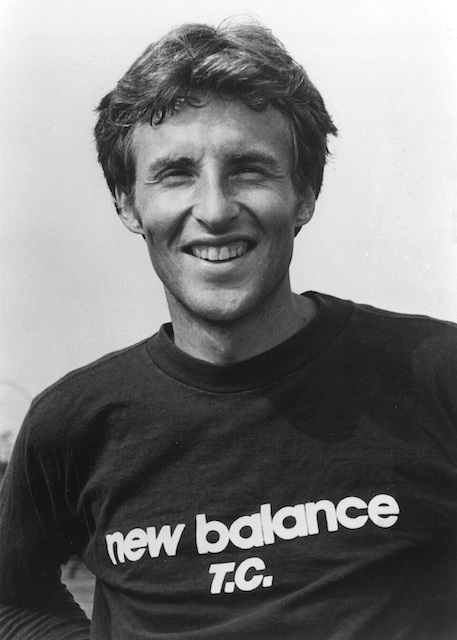
[Image of Beardsley via Wikimedia Commons]
