
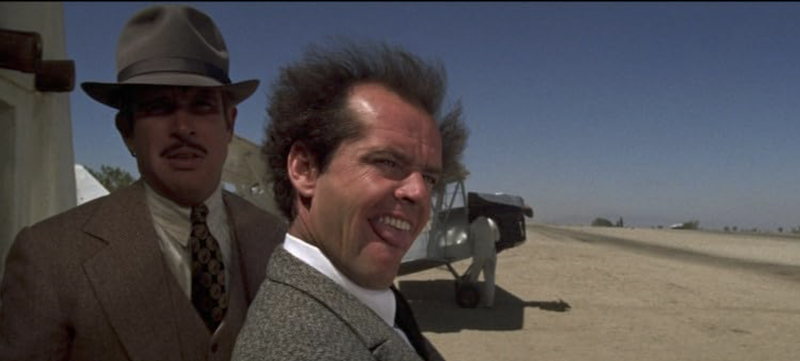
When I was in California last summer, hanging around the old Selznick studio in Culver City where Mike Nichols was making The Fortune, I heard the word “wonderful” more times in ten days than I had heard it in my entire life. Everything was “wonderful,” and some things were “very wonderful” or even “extremely wonderful.” When Nichols finished a take, he was more likely than not to deem it “wonderful”; if people had been to a party the night before, that party was “wonderful”; the rushes screened each morning were invariably “wonderful.” People could be wonderful, too—especially so in the case of The Fortune’s leading lady, 31-year-old Stockard Channing, whose big break this picture was; when Channing finished her work for the day and went back to her dressing room to change, whispers of “She’s very wonderful” or “Isn’t she very wonderful?” usually filled the sound stage in her wake. Things were so wonderful out in Culver City last August that it never would have occurred to me or anyone else that all the wonderfulness might eventually produce a movie like The Fortune. The Fortune, I think, is pretty terrible—and it just goes to show that in California’s flattering sunshine even disaster can have an alluring face.
I had gone to Hollywood because I wanted to watch a continuous stretch of work on a big American film—and The Fortune fit most of my definitions of big. In addition to the director, the production involved a full array of film-industry honchos: stars Warren Beatty and Jack Nicholson, screenwriter Carole Eastman (Five Easy Pieces), cinematographer John Alonzo (Chinatown) and art director Richard Sylbert (Chinatown, Scarecrow and all of Nichols’s films); even Channing was not unknown to me, for I had seen and enjoyed her stage performances when she was appearing with local theatrical groups in my college town of Boston.
While Nichols notoriously fends off visitors to his sets (and even makes a point of discouraging still photographers from taking his picture), he agreed to let me watch him make The Fortune; we had never met each other, and I assume he extended the invitation in part because, as a critic, I have been a fairly consistent supporter of his work. I was glad to go, because the making of The Fortune looked to be an impressive exercise in Hollywood professionalism—as indeed it was. But professionalism is not necessarily the same process as artistic creation, and I came back from California with some unresolved, if troubling, impressions of the way The Fortune was put together. When, last month, I saw the finished film, and saw it with an audience who would never know how wonderful it had once promised to be, those jumbled impressions began to assume a somewhat coherent shape—as things tend to do when one has the privilege of hindsight.
The movie’s principal set, a mangy old-time L.A. bungalow court, had been built at great expense on “40 Acres,” the back lot of the studio, and one day Sylbert, who had designed it, took me on a tour of his handiwork. Sylbert is an engaging and literate man in his 40s who has since gone on to become a production executive at Paramount; after explaining why he had made his various aesthetic choices in determining the look of The Fortune, he explained his succinct view of moviemaking in general.
“Most movies have the good things and the bad things built into them,” he said. “The point is to make the good things overshadow the bad so that people won’t notice.” Although I sat silent (I did not say so, it was fairly clear then and is, of course, abundantly clear now) that the bad things built into The Fortune was its script—a script that Eastman had written for the male stars and which (according to Nichols) she had in part conceived as a good-natured “attack” on them. That script is a comedy set in the ’20s and decked out in period slang—about two low-life heels, Nicky (Beatty) and Oscar (Nicholson), who romance a Long Island heiress to a sanitary napkin fortune, Freddie (Channing), so that they can bring her to California and get their hands on her money. (Freddie is in love with the already married Nicky, and so must marry Oscar to circumvent the Mann Act—a complicated plot point that the script must expend too much energy to establish.)
There was palpable tension on the set of The Fortune, but the tension did not derive, as one might think, from a sinking sense on the part of the company that the movie was going astray.
While Eastman’s screenplay sometimes trades in the madcap conventions of the old Three Stooges and Laurel and Hardy comedies (Beatty is a blonde, self-absorbed straight man; Nicholson the frizzy-haired, bumbling idiot), there’s no denying that the story hangs largely on the comic attempts of the two heroes to murder the innocent and likable heroine; even the film’s curious happy ending, which reunites the three protagonists in domestic near-bliss, doesn’t effectively negate the nastiness of what has come before. The Fortune, like other Nichols films (Who’s Afraid of Virginia Woolf?, The Graduate, Carnal Knowledge), have focused on largely heartless characters, that can only work if leavened by humor or, if possible, by charm. Unfortunately, the movie is not, except on scattered occasions, funny; Nichols, who rightly prides himself on going for “the element of truth rather than the gag,” ends up leaning all too heavily on gags in this film (car collisions, collapsing deck chairs, food fights). And, except for brief flashes in Channing’s ambivalent performance (she comes across as an uneasy mixture of Margaret Dumont and Betty Boop), The Fortune isn’t particularly charming, either. As a result, the film’s decidedly humorless premise overwhelms and finally wipes out its aspirations to farce—and much of the time The Fortune is cold, dead and a little ugly.
Eastman, an ex-actress who writes her scripts under the pseudonym of Adrien Joyce, was an aloof figure around the set. Her eyes behind tinted glasses, she strolled stealthily about, occasionally speaking in brittle-toned whispers to her principal confidants, Nicholson and Channing. (The only time I heard her raise her voice was when, one day at lunch, she suddenly launched into an unsolicited tirade against critic Pauline Kael—who, I later learned, had mercilessly and astutely slammed Eastman’s last script, Puzzle of a Downfall Child, five years ago.) Since Eastman prefers not to speak to reporters, it was left to others to explain what her screenplay really meant.
“In a sense,” Channing told me, “These people all kind of belong together—they’re married to each other. They’re all they have, and Freddie just doesn’t want to leave the two men; like people in a real marriage, she’ll tolerate even physical violence. When they stay together at the end, they may try to kill her again, but she’ll keep bouncing back. It’s the genre of the Marx brothers, but not as surreal. It’s more multidimensional than that, more like the Italian comedies than American.”
Did Eastman intend The Fortune as a statement about sexism? “Well,” Channing continued, “it is partially a story about shifting roles. The mousebed [the film’s colloquial term for sanitary napkin] is a symbol of what men don’t know about women, and it parallels the situation in the movie. If the wboys had gone along with Freddie, she’d have given them anything, but instead they try to wrest it away from her. It’s about role-playing between men and women… The symbolism is always there. It’s implicit that the fortune is from Freddie’s mother, from the maternal side—there’s a double meaning in that, because she has the burden of the fortune and the burden of the menstrual cycle, too. Mike said in rehearsal that it’s like Freddie is the fortune and they must woo it completely. She’s like the goose laying the golden eggs, and they goose it. It’s like raping Mother Earth—you can go on and on like that…”
Beatty, who had just finished producing and acting in Shampoo and who seemed to regard the making of The Fortune as something of a lark (“This picture has been no work for me at all” is the way he put it), took a more down-to-earth view of Eastman’s screenplay: “It’s a lot of fun, really—a silly story about silly idiots. The men want this money and they want to kill her. They don’t kill her and they don’t really want to.” In any case, the script, which reportedly ran four hours in its original draft, ultimately sustained only a 95-minute film; whatever the screenwriter’s original intentions, all that remains of her contribution to the film are those gags, the story, the viciousness of the male characters and a related butch-homosexual subtext that surfaces most startlingly when Freddie gives a gratuitous speech about how she feels like “a real individual” when dressed in men’s clothes and then, so dressed, makes love to one of the fellas.
Not in the habit of writing screenplays himself, Nichols has always been to some extent a prisoner of his material—though he sees his situation as being otherwise. “I don’t know why I don’t [write scripts],” he said. “I like the idea of two viewpoints pulling against each other. Or if not a pulling, then an overlay of one person’s insight into something over another’s; for me, it’s parallax, it gives more of a 3-D effect. You get the viewpoint of one eye, out of two eyes or four eyes…”
Maybe so, but in the instance of The Fortune, Eastman’s and Nichols’s points of view don’t pull against or elucidate each other; instead, Eastman supports a dim view of human nature consistent with that of Nichols’ other films—and doesn’t bother to transmogrify the sourness into entertainment. Only one scene I saw being shot—one in which Nicholson’s Oscar, a bundle of hysteria and sweat, unnecessarily confesses a murder plot to cops who are visiting him on another matter—was laugh-out-loud funny, and coincidentally enough, the scene is also the funniest in the finished movie. Other scenes filmed that week seemed a bit lifeless—as Nichols himself was well aware.
“You’re seeing a running down of energy,” he told me by way of explanation. “People are just tired, and it usually happens toward the end. You can’t keep laughing and scratching and having a good time; you realize that the moments when you’re rolling are the ones that really count and you work to preserve those moments.” Ultimately, Nichols was less successful at preserving those scenes than he might have hoped; the preponderance of two of the lengthier scenes shot while I was there—a seduction scene between Freddie and a barber who picks her up, a police-station confession by Oscar—found their way to the cutting room floor.
There was palpable tension on the set of The Fortune, but the tension did not derive, as one might think, from a sinking sense on the part of the company that the movie was going astray. Rather the tension came from Nichols and the manner in which he works—but it took me a while to figure that out. When, during the first afternoon of my stay, assistant director Peter Bogart told me that The Fortune was “the most emotionally taxing… the hardest… the most demanding movie he’d ever worked on,” I had no idea what he was talking about. My first impressions of the man who ran the show were just as benign as I had expected them to be: Nichols seemed very much the informal, witty and unfailingly intelligent person that his comic voice had always projected. He is a little paunchier at 44 than he had been on the record jackets of albums he made with Elaine May, but he is still low-key and articulate. He hasn’t gone Hollywood, proverbially or literally; except when he must work in the movie capital, he spends his time either in an apartment on Central Park West or on a farm in Connecticut where he devotes a lot of energy to raising horses.
When Nichols puttered around the set, checking details or conferring with Sylbert or Executive Producer Hank Moonjean or the members of his crew, he usually maintained a consistent, even-keeled tone. If there was a lull in the filmmaking process, as lights were shifted or camera set-ups were changed, Beatty and Nicholson would retreat to their bungalows, but Nichols would hold down the fort, chatting with those around him about such favorite topics as the logistical nightmares of making Catch-22, Hitchcock films, and, inevitably, Elaine May. He was not averse to trading gossip—especially if it centered on New York City’s New Yorker–Random House literary axis—and only occasionally, when he talked glowingly of parties attended by Bianca Jagger or Michelangelo Antonioni, did his banter ever so fleetingly resemble that of the compulsive name-droppers he parodied in his old comedy routines, when he was still on the outside and on his way up.
Nearly always Nichols’ face was fixed in an inscrutable, bright-eyed grin, his mouth slightly curled up to one side; in profile, he looked not unlike Peanuts’ Charlie Brown. It is Nichols’ quiet style, his willingness to sit and talk and his eagerness to laugh (sometimes until he cried) that actors tend to cite when they talk about working with him. “He’s fun—very thorough, but without any kind of a power trip,” Channing explained. “He’s totally efficient, always there to discuss the tiniest little things, any actor’s question—no matter how small… You always feel his control; he’s a wonderful audience, and he wants to give his approval and loves to laugh.” According to Beatty, “Nichols is a very good audience… One is constantly aware of a very receptive audience, and that’s what a director is in movies.” “Sometimes you want to let off steam with a minor tantrum,” Nicholson said, “and, of course, it can get out of hand. But with Mike it never does. He disregards the small stuff and stays right with the work.”
“I’m not sure my movies need to be linked together,” says Nichols. “But in my mind they’re almost the same picture over and over. They’re all about friendship.”
What Nichols’ stars say is true, but so is that tension that Peter Bogart was getting at, and which I gradually came to understand. Nichols works almost too hard at maintaining a cool and breezy front, and after a while, his success at keeping his feelings in check can become peculiarly rattling. Nichols bends over backwards to keep any displays of personal feeling out of his working life, and, in the end, he is so good at making that separation that an outside observer such strict professionalism becomes a fetish in his own right. There were frequent instances during the time I was around The Fortune when technical snafus ruined takes or scenes just refused to come alive, and Nichols always kept his feelings in tight control. His response to calamity was always to drift off into an edgy silence, light another cigarette and stare intently at the bustling technicians around him; such behavior seemed more unnatural than a shouting match or a temper tantrum would have under the circumstances. Nichols’ working manner, his ability to project a smooth and usually affable presence no matter what he was feeling inside, soon became inseparable in my mind from that tension that informs his work. The frothy surfaces of Nichols’ movies, whether a successful effort like Carnal Knowledge or a failure like The Fortune, may be, in the end, window dressing—a gloss designed to dodge a forthright expression of the misanthropic sentiments that underlie such projects. What makes The Fortune so unpalatable is that, when the jokes aren’t there, this contradiction between style and content resolves itself: we suddenly find ourselves face to face with that darkness at the bottom of the filmmaker’s soul. The Fortune’s harder substance has conviction, but its facile exterior does not.
“Fellini makes you realize what great filmmaking is,” Nichols said to me one time. “He radiates waves of love from every inch of his body. He makes you want to sit in his lap.” Because Nichols wants that affection, he packs The Fortune with slapstick—as if we might be cajoled into believing that the movie’s coldness is actually warmth. That desire for affection may also be what’s behind his determinedly unflappable demeanor, his willingness to be a good audience for actors, his looseness with the word “wonderful.” The trouble is that Nichols wants it both ways, and while that is well within his rights, I doubt that anyone will want to sit in the lap of a man whose movies have such secret, misanthropic heroes as those of Carnal Knowledge or The Fortune—no matter how eager he is to amuse. That doesn’t mean that Nichols can’t be a first-rate filmmaker, but his desire to please and entertain seems more than ever to be aesthetically incompatible with that festering at the pit of his stomach. The tension in his films and the tension on the set of The Fortune may not be hearty ones—for him, for the people who work around him or for his art.
For all this, I liked Mike Nichols—or at least the Mike Nichols I was permitted to see—but I’m worried as well as fascinated by the way he presents himself to the world. In a conversation we had my last afternoon in California, he tied up the loose ends in my feelings about him—or at least brought the contradictions clearly to light. “I’m so confused by other people’s responses to my movies,” he said. “To me the people in Virginia Woolf have a pretty good marriage. They want more from each other than for themselves. It reminds me of the end of The Fortune; the men treat Freddie badly, but despite that, they’re friends—they’re bound together, the three of them…”
“I’m not sure my movies need to be linked together,” he continued. “But in my mind they’re almost the same picture over and over. They’re all about friendship and making the best of a rough situation and not coming to any final decision about other people or one’s self… In truth, though, I think Nichols has come to a decision about people. He may prefer to believe that his movies are about friendship—that even The Day of the Dolphin is, as he puts it, about “the dream of finding a new friend”—but spiritually Nichols is not Fellini and never will be. His view of humanity is not an optimistic one—he is better off collaborating with an Edward Albee than with a Buck Henry or a dolphin—and he owes it to himself to face up to the fact, stop distancing himself and his audiences from what he really has to say by putting on a clever face. Mike Nichols does have a vision; his job now is to let it flower—even if that means that there will be cracks in his own surface and that of his work, even if that means that he will be less professional, even if that means that everything will be less “wonderful” and that he will lose a few friends.