
October is the cruelest month for Gene Mauch. In Southern California’s desert resort country, where Mauch lives, it is a time of great beauty, of warm days and cool nights, of floral-scented breezes. But for Mauch, the manager of the California Angels, it is a time spent in paradise only because another baseball season has ended too soon, and more consecutive seasons have ended that way for Mauch than for any other major league baseball manager in history. When coaches and players gather to talk about the game, someone inevitably will assert that Mauch is baseball’s smartest manager. Yet he has never led a team to a pennant.
Mauch’s drought began in 1960 when he was named manager of the Philadelphia Phillies, and it has continued through four teams and 22 seasons. He has never known what, for a baseball man, is October’s greatest glory – a world series. He has never stood along a crisply lined base path and gazed up into grandstands draped with bunting and crowded with series fans. He has never coached his fielders to be wary of the autumn shadows that fall across the grass in the waning minutes of a series game. He has never plotted ninth-inning, seventh-game strategies – those final orchestrations of relief pitchers and pinch hitters that, like the last fireflies of summer, hold back the desolation of winter. He has never won what he has always wanted to win.
Instead, Mauch has come home each October to a condominium in Rancho Mirage and a life that should be a dream come true. He spends the first days of the month on a driving range, hitting golf balls – hundreds at a time – toward the clear, desert horizon. Then he collects his friends, men in their fifties who comport themselves with a casual savvy reminiscent of Bing Crosby, and heads for the Springs Country Club, a challenging course where he keeps a five handicap. By early afternoon, the guys have often put 27 holes behind them; after a brief rest they ease over to Sunrise Country Club for another 18. Mauch and company roll up and down the fairways in his deluxe golf cart listening to Frank Sinatra and Charlie Pride on an eight-track stereo or watching football games on a television rigged to the dashboard. Dusk usually finds them on the patio at Mauch’s place behind Sunrise’s ninth green. There, he fires up a grill and passes around drinks and, after dinner, entices his guests to play bridge, a game he approaches with the same intensity he brings to any other. Later, he and his wife, Nina Lee, will retire to their earth-tone living room to watch a movie on their giant screen Sony. This is the good life, and if Mauch is suffering because another world series has passed him by, he keeps it to himself.
There was one October day, though, where Mauch could not hide how he felt about missing a chance at the series. It was 1964, the year his Philadelphia Phillies should have won the National League pennant but did not, the year he watched the team blow a six-and-a-half-game lead by losing ten consecutive games with only twelve remaining in the season. It was the biggest choke in modern sports history. Mauch attended the series that year, but as a spectator. As he watched the National League champion St. Louis Cardinals lining up for the national anthem, he noticed that all but one wore pristine new uniforms. Bill White, a first basemen who had hit a home run on the final day of the season to end Mauch’s pennant dreams, was dressed in a worn uniform. It was an oddly poignant sight.
“I guess he was superstitious,” Mauch says now, nearly two decades later. “Seeing him in that old uniform was what did me in. I just couldn’t take it. The Phillies should have been on that field.” As the anthem began, Mauch fled to a dark and echoing ramp leading to the bowels of the stadium. He stayed there until he regained his composure.
The years since the now legendary collapse of the 1964 Phillies have seen Mauch at the helm of losing clubs in Montreal and Minnesota. He finally resigned as manager of Minnesota late in the 1980 season after spending five difficult years watching the Twins’ penurious owner, Calvin Griffith, let the team’s most talented players defect to other outfits. For the first time in his life, Mauch was depressed by baseball. Broadcaster and former Dodgers star Don Drysdale, an old friend from their days together in the National League, remembers inviting Mauch to dinner shortly after he left the Twins. “He was drawn and pale and withered,” Drysdale recalls. “He was like the beginning of a painting that was just sketched out but without any color added.” That fall, Mauch turned down four offers to return to managing. He vowed that never again would he pilot a club that was not competitive.
If Gene Mauch has ever considered himself a martyr, it was during those long months following his resignation from the Twins. On several occasions, he was heard to say that the problem with the Minnesota management and with the players was that “nobody cared enough.” Perhaps that was true, but it was even more true that Mauch had never stopped caring, and now he was asking why that wasn’t sufficient.
Of all the teams in the major leagues, only one was as star-crossed in its way as Mauch was in his – the California Angels. Save for the Angels’ anomalous appearance in the 1979 American League playoffs, the team had never been much more than a safe harbor for has-beens and disappointing upstarts. But 74-year-old owner Gene Autry, who made his name as a singing cowboy and his fortune in real estate and broadcasting, desperately wanted a winner. During the winter of 1980, he hired Mauch to work in the Angels’ front office. From there, it was just a step back to the playing field, a step Mauch took two months into the 1981 season.
At last, it seemed, Mauch had found a team that could win it all for him. Autry had recently invested $15 million in free agents, landing some of the best baseball talent money could buy. Rod Carew, the perennial American League batting champion, anchored the Angels’ star-laden lineup. Rick Burleson and Bobby Grich, the shortstop and second baseman, constituted one of the game’s best offensive and defensive infield tandems. Fred Lynn was without peer in center field. Ken Forsch highlighted a sketchy but salvageable pitching staff. Despite all these stars, Mauch’s predecessor, Jim Fregosi, had been unable to make the team win. But after Mauch took over, the Angels roared through eight victories in his first eleven games.
Then, on June 12, the players’ strike hit – and it hit Mauch as hard as anyone. He saw the walkout as a kind of cosmic injustice, the latest of many in his career. “I don’t like people playing with my emotions,” he said in his Anaheim office one morning shortly after the eight-week strike was finally settled. “I was sky-high before the strike. The club was playing well. We were having fun.” Mauch paused, then wistfully added, “It’ll come back. It has to.”
But it did not. The Angels floundered through the remainder of the 1981 season – in one dismal stretch the team dropped fourteen out of fifteen games – and finished seventh in the American League Western Division. Through it all, Mauch, usually an inflammable presence, was restrained. There was only one clubhouse outburst, a closed-door session after a blown doubleheader in Cleveland. As Mauch plotted tactics and juggled lineups, he gave many people the impression that he was already planning for the 1982 season. Later he would say, “By the time the strike had lasted seven weeks, I told my wife that there was no way I’d be able to reach the team again that season.” He was right. In October, he once again returned home to Rancho Mirage.
On a warm February morning during the first week of 1982 spring training, Gene Mauch leaned against a batting cage at the Angels’ camp, the Francisco Grande golfing resort deep in sagebrush country 50 miles south of Phoenix. The team’s pitchers and catchers were the only players in camp so far, having reported several weeks earlier than their counterparts on most other major league clubs. Mauch felt he needed extra time to solve the main problem that killed his 1981 team – shaky pitching.
It was a cloudless and shimmering morning, and the promise of a new season informed its every aspect, lending freshness and urgency to the casual sounds, sights, and smells of a ball park. Bats cracked against balls. Balls snapped into leather gloves. The perfume of tar and tobacco around the batting cage was spring sweet. And there was something else. Among the snowbirds clustered in the rickety Francisco Grande bleachers, one question buzzed incessantly: “Is Reggie in camp yet?” Over the winter, Gene Autry had signed baseball’s biggest name to a lucrative contract. Gene Mauch, who had never managed a team in postseason play, would now be directing the efforts of the man whose world series heroics for the mighty New York Yankees had earned him the nickname “Mr. October.”
For the moment, Mauch was trying not to think about Reggie Jackson. He was instructing Bruce Kison, one of his pitchers, in an arcane but highly valuable art: the “pitchout” delivery. In a base-stealing situation, managers usually order their pitchers to throw the ball away from the strike zone so the catcher can easily pluck it from the air in a standing position and throw out the runner. Mauch, however, wanted a further refinement. In order to give his catchers an extra second to make the throw, he wanted Kison to make the pitchout without a windup. Two Angels coaches hovered along the baselines, stopwatches at the ready, timing Kison’s motion and calling out the results to Mauch. Blue and red Angels cap pulled down snugly over white hair, deeply tanned face dominated by brown eyes and a square jaw, the manager looks younger than his 56 years.
“Eliminate that thing,” Mauch called to Kison as the pitcher kicked his left leg up off the mound and threw. Mauch then turned to catcher Bob Boone. “Can the batter touch that ball?”
“Yes he can.”
“One more Bruce. See if you can just step forward and throw the ball. And keep it away from the hitter. The catcher knows it’s coming. He’ll be out there to get it.”
Kison, who wears a world series ring earned with the Pittsburgh Pirates in 1979, listened attentively. Then he stepped and threw.
“All right, that’s good,” Mauch said.
When Kison left the mound, John D’Acquisto, a talented young pitcher who played on the Angels’ top farm team last season, replaced him. D’Acquisto is thought to have one of the finest throwing arms in baseball. But he has been up and down from the minors to the majors and back for eight years, prompting Mauch to crack, “If he remains a prospect for one more season, he’s going to become a suspect.”
As Mauch watched D’Acquisto warm up, Angels executive vice president Buzzie Bavasi, a large man given to loose-fitting shirts and straw hats, strolled onto the field from his camp office. He had been spending much of the spring on the telephone searching for pitching talent in other organizations in case Mauch decided that only a trade could solve the problem. When Bavasi reached the batting cage, he hugged Mauch around the shoulders. Mauch had just said to Bob Boone that if he could get 200 innings out of D’Acquisto this season, he would give Boone his Cadillac. He repeated the promise to Bavasi.
“Does that mean I’m going to have to get you a new one, Gene?”
“Yeah.” Both men laughed.
Throughout the first weeks of spring, in spite of the pitching worries, high spirits prevailed at the Francisco Grande. The universal belief was that the 1982 Angels were blessed with a dizzying array of talent.
Spring training is a time of hope, and Mauch welcomes the chance to begin again. Faced with 22 years of disappointment, many managers would retire and open a restaurant. But Mauch perseveres because he loves to see the game played well. He is a connoisseur of baseball players. Every morning, he stood alone on the pitching mound of the camp’s main diamond helping hitters with place hitting (the art of stroking a ball to a particular spot on the field), calling out beautiful or great for each success. Every afternoon, he lingered along the third and then the first baseline watching Rod Carew expertly lay down bunts. When asked about his fondest memories of the game, he responded not by mentioning a key hit or an astute decision but by recalling his days as a player with the Boston Red Sox when he had “the opportunity” to pitch batting practice to future hall of famer Ted Williams and “watch the master go about his business.”
Mauch’s heightened appreciation for the aesthetics of the game as embodied by the men who play it stems to a large degree from his early awareness of his own athletic limitations. “Because Gene was never really a great player himself, he can appreciate good players,” says Bavasi. “And he can quickly read what their strengths and weaknesses are because he had to be so aware of what his were.”
Which is why his worries about his pitchers notwithstanding, Mauch’s main emotion this spring is joy. He adores Reggie Jackson. Mr. October had an off season in 1981, but Mauch believes that he was not at fault. “It’s not a good idea for a 35-year-old player to hit .235 like Reggie did last year, but he was playing in a trying situation under George Steinbrenner [owner of the New York Yankees]. It’s my contention that there has to be something special about a person who’s accomplished what Reggie has. I’ve seen Hank Aaron and Willie Mays have some great years after they were six years older than Reggie. I know he thrives on attention, and he’s gonna get it here. I’m really glad to have him.”
With that, Mauch headed for the clubhouse and a beer.
It was in October 1938 when Gene Mauch’s family made the move that would forever connect him to baseball. His father, a baker who lost his business after the 1929 stock market crash and spent the 1930s as a field hand on oil rigs, believed 12-year-old Gene had the potential to be a major league player. Los Angeles, because of its climate and its profusion of sandlot baseball teams, had long been a mecca for the sport, and George Mauch moved his family there from Kansas so his son could play a better quality of ball. They traveled to California by driving a car dealer’s 1935 Chrysler over the mountains and across the desert; automobiles were cheaper in the Midwest, and you could make a profit by driving one out. Gene still remembers the trip: falling asleep on the last leg and waking up the next morning at a family friend’s house in Pasadena with the smell of orange blossoms wafting through his room. Later that day, the elder Mauch took his family for a drive west on Pico Boulevard. He didn’t tell them where they were headed. “We came up over a hill, and there was the Pacific,” Gene remembers. “I’ll never forget taking my shoes off and having that surf come in and tug at my feet. For a boy who’d seen dry, dusty plains all his life, I thought I’d died and gone to heaven.”
As far as Mauch’s baseball career was concerned, he had indeed gone to heaven. During the 1940s he played shortstop for Fremont High, where his talent and moxie attracted waves of scouts. At seventeen, he signed with the Brooklyn Dodgers, and when the 1944 season began, he was one of many wartime rookies with a starting job in the big leagues. He opened the year at Ebbets Field as the Dodgers’ shortstop. But his playing career was quickly interrupted. After six weeks, he joined the army air corps. He returned in 1946 and rejoined the team only to discover that the National League’s stars had returned, too. It was then that Mauch realized, “I was a good player in a little pond, even a good player in a little bigger pond, but in the big pond I was very ordinary. That was a sad day.” A writer who later covered Mauch during his turbulent years as manager of the Phillies says that Mauch’s realization of the limitations of his talent was seminal, but unlike Bavasi, who believes it taught Mauch to appreciate great players, the writer believes it scarred him. “He wasn’t a good player, and that killed him a little bit,” he says. “Sometimes guys like that are driven to win.”
Mauch tried to hang on as a player, but in the following decade all he could do was boomerang between the minor leagues and the majors. By the early 1950s people were already envisioning him as a manager. “Other people had the idea long before I did,” he recalls. “I don’t like to talk about stuff like this, but I’ve read where Branch Rickey [the legendary Brooklyn Dodgers executive] said when I was coming up, ‘When you look at Mauch you think he’s 16. When you watch him play you think he’s 26. When you talk to talk to him about baseball, you think he’s 36.’”
In 1953, at 27, Mauch was named player/manager of the Milwaukee Braves Double A farm team, the Atlanta Crackers. It was a trying experience for him. He lost 25 pounds “from nervousness.” He was frequently ejected from games for arguing. Furman Bisher, at the time sports editor of the Atlanta Constitution and later the sports editor of the rival Atlanta Journal, remembers Mauch even engaging in fisticuffs with one of his own players, the future Cincinnati Reds pitcher Art Fowler, after a dispute in a locker room in Memphis. “Hell, I was fighting with everybody,” Mauch concedes. “I was intolerant of every flaw. I didn’t belong there.”
In his first years managing in the majors, Mauch was still volatile. Disturbances occurred on and off the field. Some can be categorized simply as marvelous examples of baseball’s riotous tradition. When an umpire refused a request by Phillies pitcher Grant Jackson for a new baseball, Mauch charged to the mound, grabbed the ball in use from Jackson’s hand, and danced on it with his spikes. His pitcher got a new ball.
At other times, however, Mauch’s actions were more violent. In 1963, when the Phillies dropped a game to Houston after a pinch hit by a tiny infielder making his debut appearance in the majors. Mauch stormed into the Phillies clubhouse screaming about getting beaten by “a guy who looks like a Little Leaguer.” The Houston ball park was known for catering lavish postgame dinners, and as Mauch continued to fume, his players gathered around the buffet table helping themselves to fried chicken, ribs swimming in barbecue sauce, and potato salad. The sight of the Phillies enjoying their meal infuriated the already agitated manager. He ran to the table, grabbed it by the end, and flipped it over, splattering the players with barbecue sauce. Reporters learned of the incident, writing not only about the greasy baptism but of Mauch’s ravings about the Little Leaguer – Joe Morgan, who became one of baseball’s greatest stars.
Mauch at times seemed unrestrained. During a 1966 game between the Phillies and the Mets, New York catcher Jerry Grote chased a foul popup to the edge of Philadelphia’s bench, where Mauch was perched on the top step. As Grote prepared to make the catch, Mauch karate-chopped his outstretched arm. “Grote didn’t say anything because that’s the kind of player he was,” Mauch recalls. “But from then on, whenever he came after a popup in my direction, he was carrying his mask. If I’d tried it again, I would have gotten that mask across the forehead.” The following year, baseball rewrote its rules to prohibit an opposing team from interfering with a player attempting to make a catch in their dugout.
Players who know Mauch well say that he has “mellowed” over the years. “He’s very intense,” says Rod Carew, who played three seasons for Mauch in Minnesota before joining him in California. “We watch him on the bench and look for his face to redden and his veins to pop out when something happens. But he’s really pretty quiet. He just observes.” Actually, Mauch has always been a combination of fire and ice, the Bobby Fischer of baseball – antagonistic but also coolly calculating.
It was during his last years as a player that Mauch developed his tactical bent. With his prospects fading, he began to study the game more carefully than ever. Riding the bench with the Boston Red Sox, he discovered one day just how much a thoughtful manager could contribute. Mickey Vernon led off the inning for the Red Sox by pinch hitting for the pitcher, who was batting last in the order. After a brief rally, the Sox’s sixth batter made the final out. As manager Mike Higgins eyed his lineup card, Mauch eased up to him and suggested that he leave Vernon in the game batting in the ninth slot so he could hit the next inning. He said Higgins should write the new relief pitcher in the sixth slot. That way, the pinch hitter could in effect bat twice for the pitcher.
“Mike said, ‘No, I can’t be bothered with that,’” Mauch recalls. “He didn’t make the move. I’m generally credited with introducing that strategy [“flip-flopping” remains in use in the National League but disappeared from the junior circuit in 1973 with the introduction of the designated hitter]. That was the first time I suggested it. I was always reading the rule book. The rule book is more interesting to me than a good novel.”
Mauch’s attention to the rules and their nuances has been evident throughout his career. While the pace of a baseball game can seem leisurely to the casual fan, nothing could be further from the truth. Every action creates a reaction. As a young manager, Mauch started to experiment. In the early 1960s, he was the first to use a five-man infield in crucial situations, bringing outfielders onto the dirt to plug holes. Before games, he’s been known to turn in lineup cards listing the name of his starting pitcher in an outfielder’s position, a move calculated to confuse opposing managers anxious to know whether Mauch’s lineup will feature left-handed or right-handed batters.
To hatch such plots, Mauch usually arrives at the park well before his players. He values his time alone in his office, for it is there he plans the moves he’ll make in the coming game. He begins by examining box scores and statistics, anxious to learn when opposing relievers last pitched and how effective they were. He studies how his team fared against various clubs last season – at their ball parks and his, in day games and at night. These are rudimentary managerial concerns, but Mauch invests an unusual amount of energy in arming himself with the facts. His preparation shows.
Minnesota Twins shortstop Roy Smalley, Mauch’s nephew, remembers the first game he played for his uncle’s team. “We were standing around the batting cage. Jim Hughes was pitching [for the Twins] that night. Gene told me, ‘You know Hughes is a sinkerball pitcher, and usually you’d play batters to pull him.’
“I said, ‘Yes.’
“Then Gene said. ‘But he’s got such a great change-up that all these hitters will be waiting for it. Don’t play them to pull.’
“I’d never had a manager go into things like that with me. Gene’s teams are always prepared like that. He’s incredibly thorough.”
Mauch began managing full-time in the minors in 1958, and in 1960, when he was named manager of the Phillies, he had his chance to start putting his ideas to work. There could have been no more difficult place for him to begin than Philadelphia. The Phillies were the worst team in baseball. Mauch’s predecessor, Eddie Sawyer, had, in fact, resigned one day into the 1960 season, leaving with the classic line, “I’m 49, and I’d like to live to be 50.”
Mauch approached the task with characteristic toughness. “I was young and strong and, man, I could work. I could pitch 45 minutes of batting practice in a park where it was 103 degrees and 80 percent humidity, and it wouldn’t bother me a bit. Guys don’t lay down on you when you work like that.” After finishing in last place Mauch’s first two years (Philadelphia lost 23 games in a row in 1961, the longest losing streak in modern major league history), the Phillies began to rise in the standings. In 1962, the team finished seventh, a Herculean accomplishment. Mauch was named National League manager of year. In 1963, the Phillies finished in the upper division for the first time in a half-dozen years, a happy occurrence that Mauch attributes to his flipping over the table of ribs in Houston (after the incident, the team won five of the next six games). In 1964, powered by the hitting of Richie Allen, Wes Covington, and Johnny Callison and the pitching of Chris Short and nineteen-game winner Jim Bunning, the Phillies dominated the National League.
What happened to Mauch and the Phillies in the final two weeks of the 1964 season has been debated ever since. The catastrophic demise of the team stands out, like the sinking of the Titanic, as one of those disasters that simply could not happen – but did. There are some who say Mauch will never forget the collapse, that memories of it still disturb him like a scar throbbing in the night.
The losing streak started when Philadelphia dropped seven games at home to Cincinnati and Milwaukee. But there had been an unsettling loss in Los Angeles prior to the disastrous home stand that foreshadowed it all like a mild tremor before an earthquake. The Phillies lost the game in extra innings after Mauch brought in a rookie reliever to quash a Dodgers rally. Lightning-fast Willie Davis was on third base for Los Angeles, and as the reliever, Moorie Steevens, went into his windup, Davis tried to steal home – an audacious, rarely attempted play. Steevens saw Davis blur down the baseline and hastily threw the ball toward the plate. It sailed over his catcher’s head and into the backstop. Davis scored. The miscue was a sign of things to come.
Unbelievably, the Phillies would then lose another game when an opposing base runner stole home. In the sixth inning of a scoreless contest with Cincinnati, Reds infielder Chico Ruiz dashed across the plate. Frank Robinson, Cincinnati’s best hitter, was at bat. Frank Dolson, sports editor of the Philadelphia Inquirer, recalls, “It was an insane thing to do. He chose to do it on his own. But those were the kind of things that were happening. It was a horror show.” The final score: Reds 1, Phillies 0.
Seven games into the tailspin, Mauch called a clubhouse meeting and in Knute Rockne fashion, exhorted his players to come out of it. “He told us to do anything to win,” Jim Bunning remembers. “Anything. Throw punches. Start a free-for-all. Anything.” But nothing worked. The Philadelphia reporters who covered the collapse believe that the reason nothing worked was that Mauch panicked.
During the collapse, Mauch pitched the Phllies’ aces, Bunning and Short, twice each with only two days’ rest between outings. Both pitchers were accustomed to working with three days between starts. Allen Lewis, who covered the Phillies for the Inquirer, would observe years later, “There have been some pennants blown, and almost all of them were blown because managers fouled up their pitching rotations. It’s one of those truisms. He [Mauch] feels like he did what he had to do, using Bunning and Short two times each with just two days’ rest. But neither of them won a game. Neither of them even finished a game.”
Bunning believes that Mauch handled the losing streak as well as anyone could have. “He pitched me on a Thursday against the Braves, and I left the game for a pinch hitter in the seventh. We lost 5-3. Then we lost Friday. We lost Saturday. I asked Mauch if I could try to stop it on Sunday. He said go ahead. I didn’t have it. We lost 14-8. Then I tried to pitch on Wednesday. We got beat 8-5.” Bunning feels Mauch had to rely on what had worked in the past. “I just wanted the manager to hand me the ball,” Bunning says. “I’d had a lot of success with that.” Bunning, in fact, had pitched a perfect game for Mauch earlier in the season.
Even the reporters who attacked Mauch after the season’s grim conclusion agree with Bunning on one point. “You look at that team,” Bunning says, “and you see fourth-place talent. We wouldn’t have been up there if it hadn’t been for Gene Mauch.” Mauch himself views the debacle with numb disappointment. “That year, too much was made of what a great manager I was, what a great job I was doing. It was the players who were doing the good job. But they got to depending on me, and at the end of the season, I just didn’t have the answers.”
Nonetheless, Mauch was again voted National League manager of the year. But the award was small solace. For years, he has been subjected to reminders of the 1964 nightmare, reminders that began soon after the season’s end. One Sunday morning that fall, Mauch walked into the Sheraton-West Hotel in Los Angeles to join a group of friends headed for a Rams football game. As Mauch entered the dining room, an acquaintance whom he knew to be a big gambler spotted him and shouted, “You lost me $10,000.”
During the rest of Mauch’s years in Philadelphia, the Phillies always finished respectably in the middle of the pack. But the owners fired Mauch in 1968 following a dispute about how to handle the team’s moody star, Richie Allen. Mauch then migrated to Montreal to become the first manager of the expansion Expos. During his seven years in Canada, the Expos never played winning baseball. In 1973, a particularly weak year in the National League’s Eastern Division, the Expos managed to stay in contention late into the season, even though they finished with a 79-83 record. For the third time Mauch was voted manager of the year, but he was fired in 1975. He took over in Minnesota the next year. The Twins were one of the most powerful teams in the American League, but they were unfortunately one of the least affluent. After free agents became baseball’s new reality in the late 1970s, the Minnesota club began to take on the aura of a city facing a hurricane. Everybody packed up his contract and left for higher ground. In just a few years, the Twins lost thirteen players who had either played out their options or were traded because owner Calvin Griffith wanted to deal them away before they could auction themselves. Mauch watched helplessly while such stars as Rod Carew, Larry Hisle, and the late Lyman Bostock left the Twins. On August 24, 1980, in the midst of a disappointing season, he quit. He said baseball was no longer any fun.
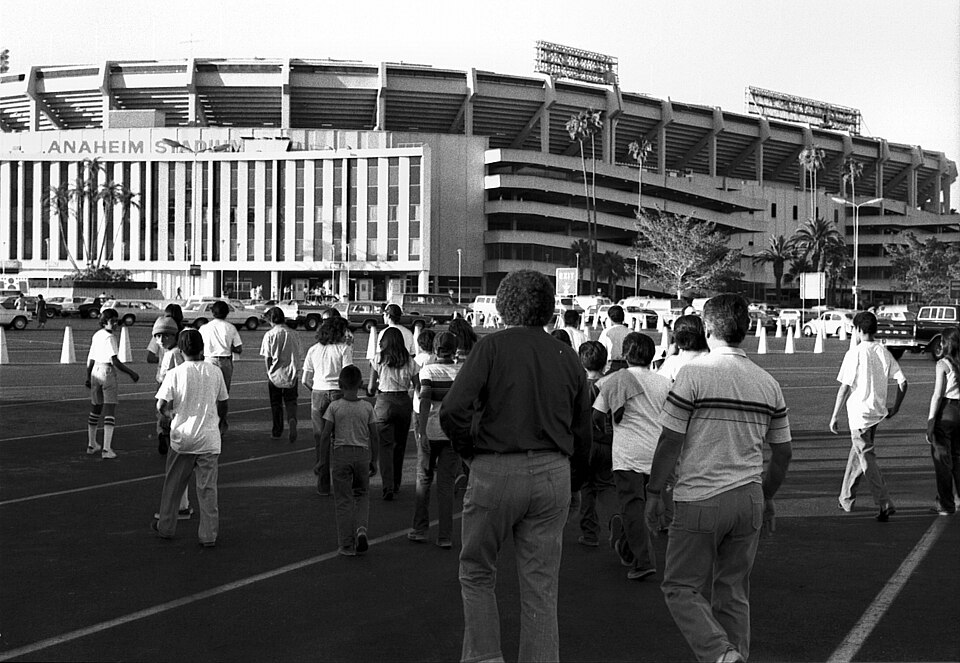
It was a sadder Gene Mauch who took over the California Angels on May 28, 1981. He was just as combustible, just as canny, but to his mind more understanding. He had done some thinking during his year off, and he believed he could see the game with better perspective. “Society has changed to a point, and I’ve had to change,” he said one afternoon late in the 1981 season, sitting in his office at Anaheim Stadium. It is a room devoid of the souvenirs that clutter most such warrens. No autographed baseballs. No photos of celebrities. Just a conference table and a filing cabinet. Mauch’s office is meant strictly for business, and that business is different than it was when he started managing.
“It used to be that there were several motivating factors in baseball – fear, remuneration, and pride,” Mauch said. “Now there are so many teams that no player is scared he’ll lose his job. And they’re all making so damn much money that that doesn’t work, either – so you work on their pride, and degrading or dehumanizing them won’t help that. If you can’t make them feel better about themselves, then you’re not capable of managing today.
“It’s really a simple game. I’m not going to laud or applaud anyone who knows the rules of baseball. The complexities in the sport lie in the human element involved.”
That Mauch can suggest that the human element presents the ultimate challenge to a manager indicates that he has indeed evolved. “If someone had said that a manager motivated me back when I was playing,” he said, “I would have taken it as an insult. But now I think about the exact set of words I’m going to say to a player who’s having trouble. I try out this word, then that word. I say, ‘No, that one won’t work. Let’s try this one.’”
Still, though, the questions remain: Can Mauch ever lead a team to a pennant? Will he ever be on the field in the cool of October when a world championship, not just another game, is on the line?
Many of Mauch’s baseball friends insist that the reason he has never managed a team in the world series is simple – he has never managed under the right circumstances. The Phillies of the early 1960s were baseball’s worst. The Expos of the late 1960s were a group of struggling expansion draftees. The talented Twins of the mid-1970s departed for high-paying contracts with other teams. The 1981 Angels went on strike. “It’s easy to see why Gene has not won,” Bavasi says. “He’s never had the horses.”
But is it really that simple? Is Gene Mauch merely the victim of a 22-year streak of bad luck? Plumbing his history and personality, it’s difficult to find a fatal flaw. He’s knowledgeable, astute. He works hard, and he loves the game. At times, he’s gruff and testy. Some of his players say they’ve never had a warm relationship with him. They’ve never been able to go into his office to seek help with a personal problem – the kind of help players on the cross-town-rival Los Angeles Dodgers frequently seek from Tommy Lasorda, who runs his world-champion team much like an Italian matriarch would. Still, Mauch does love baseball players, and most know it.
In the end, it is impossible to say just why Mauch has never taken a team to the world series. In spite of fans’ infatuation with statistics, baseball remains a game of mysteries. It is governed by chance as much as by skill or will. It is a game of hot streaks and cold, some lasting only a few days, others, as in Mauch’s case, nearly a quarter of a century.
In the spring, baseball is best discussed in future tense. Ballplayers enjoy the privilege of wiping the slate clean – a luxury that Mauch believes in, for it keeps him from brooding about the past. Like every other team, the 1982 Angels are starting over, and they’re doing so with Mr. October – Reggie Jackson – in the lineup.
“After all these years,” Mauch says, “it still burns in me to win it all. Just say that October hasn’t come yet for Mauch. But it will. The first October will be when I’m in a world series.”
Postscript: The 1982 Angels, thanks to a terrific season by Reggie Jackson – 39 homers and 101 runs batted in – made it to the American League playoffs but fell in five games to the Milwaukee Brewers. In 1986, the Angels were at their peak, winning their division and taking a 3-2 playoff lead over the Boston Red Sox. With one strike needed for a victory in game 6, Angels reliever Donnie Moore gave up a two-run homer to Dave Henderson. The Red Sox not only held on for a playoff-tying win that day, but they took the finale and went to the world series. Mauch retired the next year and died of lung cancer in Rancho Mirage in 2005 at 79. As of 2026, he still holds the unenviable record for longest tenure as manager of a major league team without reaching a world series – 26 seasons. October never came for Gene Mauch.—Steve Oney
[Photo Credit: Orange County Archives via Wikimedia Commons]
